What to Expect in Your First BJJ Class
Nervous about stepping on the mat for the first time? Here's exactly what happens in a Grip BJJ beginner class — and why you have nothing to worry about.
- Beginners
- Adult BJJ
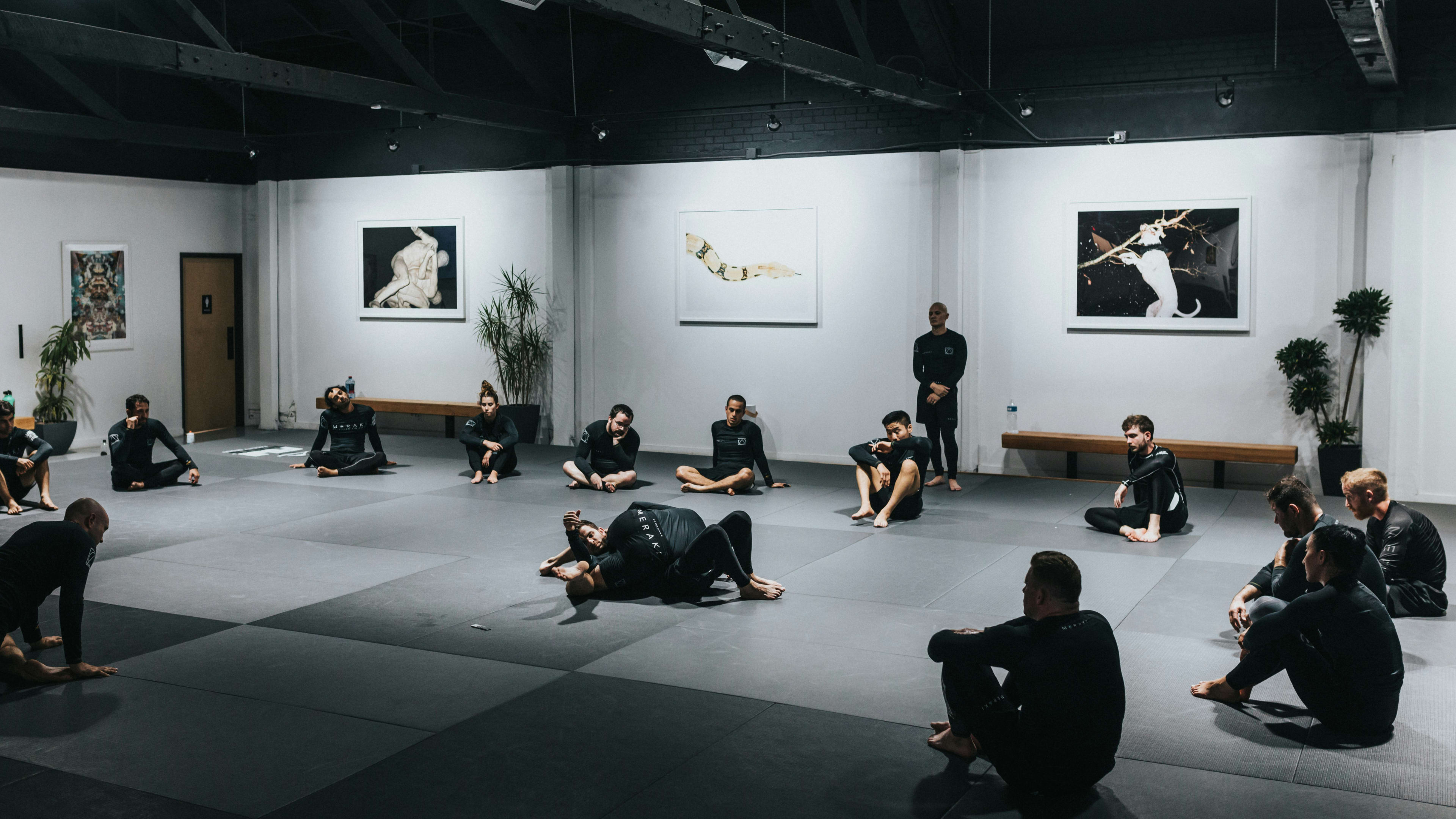
Walking into a martial arts gym for the first time is nerve-wracking. We know. Everyone in the room has been exactly where you are — standing at the edge of the mat, not sure what to do with their hands, wondering if they're going to embarrass themselves.
The good news: Brazilian Jiu-Jitsu is one of the most welcoming martial arts you can start. Here's exactly what to expect when you come in for your first class at Grip BJJ.
Before Class
Arrive five to ten minutes early. Tell the instructor at the door it's your first time — they'll point you to where to get changed, explain how the session runs, and make sure you're not standing alone wondering what's happening.
You don't need a gi (the uniform) for your first class. Wear something comfortable you can move in — shorts and a t-shirt work fine. We'll sort you out with a loaner gi or let you train in workout clothes until you decide this is for you.
The Warm-Up (10–15 min)
Every class starts with a warm-up: a mix of movement drills, shrimping, forward and backward rolls, and partner exercises that build the coordination and body awareness BJJ relies on. It looks strange at first. By week three, it'll feel natural.
Technique (20–30 min)
The instructor breaks down one or two techniques — usually from the same position, so everything connects. They demonstrate slowly, explain the detail that makes it work, and then you drill it with a partner. Reps, not speed. No one is testing you.
As a beginner, you're not expected to retain everything from day one. You're building a library of movements that will start clicking together over the coming weeks.
Sparring (Positional or Live)
In your first class, sparring is usually positional — you start from a set position (say, one person in guard) and work from there, rather than going full free-rolling. It's controlled, low-pressure, and the best way to feel what BJJ actually is.
If you're not comfortable sparring yet, that's completely fine. No one is forced onto the mat. Most beginners are surprised by how safe and collaborative it feels — your training partners want you to come back next week.
After Class
You'll be tired. You'll probably have been tapped out a dozen times. You'll also feel something that's hard to explain until you've been on the mat — a kind of focused calm that stays with you for the rest of the day.
Stick around after class. Ask questions. The team at Grip BJJ trains together and tends to hang around — it's a good time to get to know the people you'll be training with.
One More Thing
Every single person on that mat — the purple belts, the blue belts, the people who look like they were born grappling — had a first class. They tapped out a lot. They got confused. They came back.
That's the whole thing. Come back.
Често задавани въпроси
None at all. Every class at Grip BJJ is structured to work for complete beginners and experienced practitioners at the same time. The instructor will make sure you're looked after.
For your first class, comfortable workout clothes are fine — shorts and a t-shirt, or compression gear. No shoes on the mat. We'll help you sort out a gi once you decide to sign up.
BJJ has a strong culture of training smart and looking after your partners. Beginners are paired carefully, and there's no pressure to do anything you're not comfortable with. Soreness is normal. Injuries from responsible training are rare.
Most people notice a real difference in coordination and confidence within the first month. Progress in BJJ is nonlinear — some weeks feel like breakthroughs, others feel like you've forgotten everything. Both are normal.